
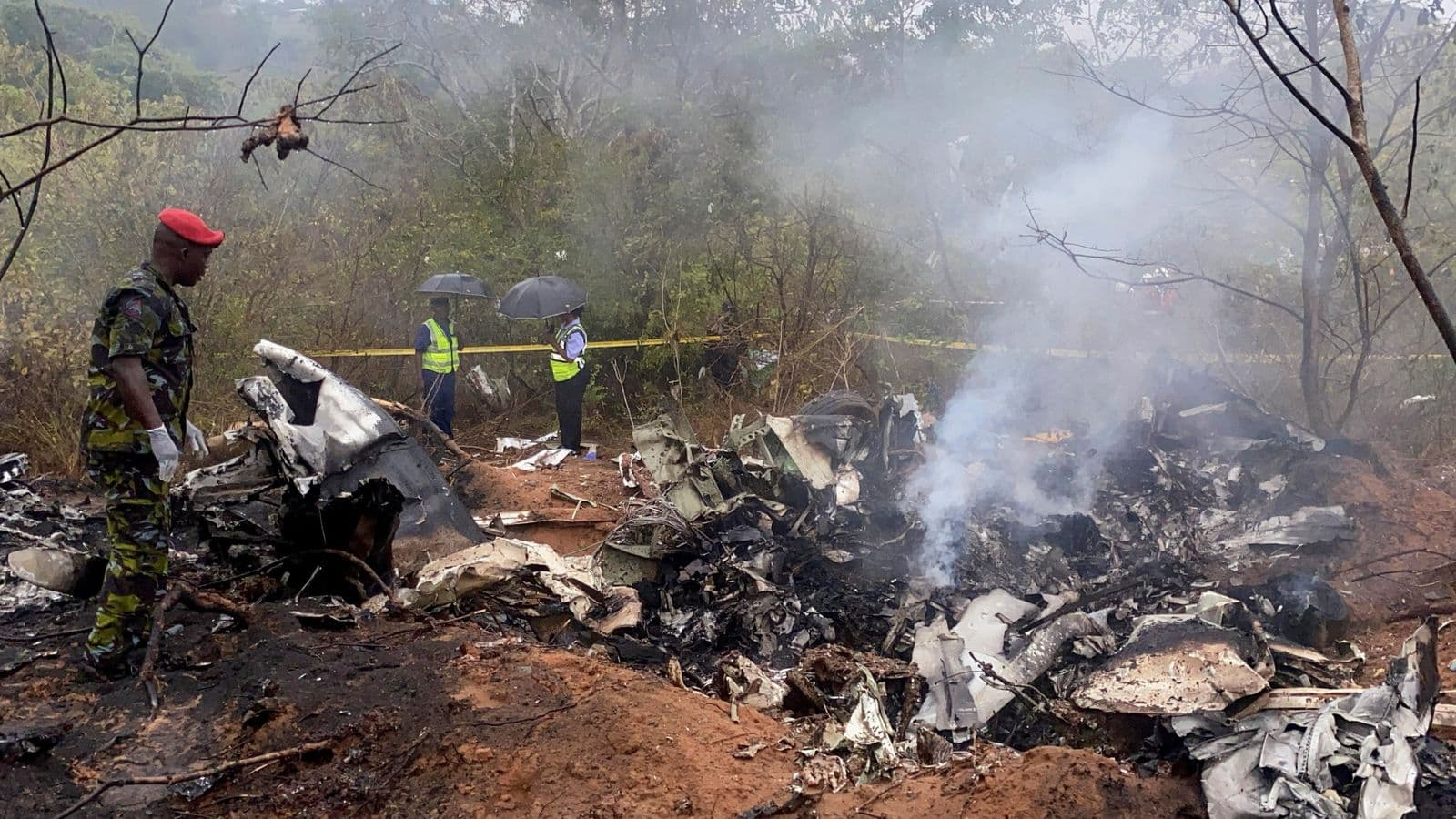
On the morning of October 28 2025, a small aircraft operated by Mombasa Air Safari crashed in the coastal region of Kwale County in Kenya, killing all eleven people on board. The aircraft, a Cessna 208B Grand Caravan registered as 5Y CCA, was carrying eight Hungarian and two German tourists along with a Kenyan pilot. The tragedy has drawn international attention, not only because of the foreign victims involved but also because it highlights ongoing safety concerns within Kenya’s domestic aviation sector.
What Happened
The aircraft departed early Tuesday morning from Ukunda Airport, near the Diani Beach area, on a scheduled flight to Kichwa Tembo Airstrip adjacent to the Maasai Mara National Reserve. Within minutes of takeoff, air traffic controllers lost communication with the pilot. Shortly afterward, local authorities reported that the plane had gone missing, prompting a large-scale search and rescue operation. Later that morning, the wreckage was found in a hilly, wooded area of Kwale County approximately forty kilometers from Diani.
Weather conditions at the time were reportedly poor, with heavy rainfall and dense fog. Officials from the Kenya Civil Aviation Authority (KCAA) stated that these factors may have played a role in the crash, although investigations are still at an early stage. The KCAA has dispatched a team of aviation safety experts to the crash site to begin analyzing the debris and flight path. The agency emphasized that a full technical investigation will determine whether mechanical faults, pilot error, or environmental conditions were the main cause.
Victims and Response
The ten passengers on board were identified as eight Hungarian and two German nationals, all believed to be on safari holiday tours. The Kenyan pilot also perished. Mombasa Air Safari expressed its condolences to the victims’ families and confirmed that it is cooperating fully with investigators. Both the Hungarian and German embassies have issued statements confirming that they are in contact with Kenyan authorities and providing consular assistance to relatives of the deceased.
Local officials sealed off the crash site to secure evidence and allow emergency teams to recover the remains. Witnesses described hearing a loud explosion before seeing smoke rising from a forested area. Images released later showed burnt wreckage scattered across a steep hillside, underscoring the difficulty of access in such terrain.
Broader Safety Context
Kenya’s domestic air network depends heavily on small charter and safari flights connecting remote game reserves to coastal tourist hubs. These routes are vital to the country’s tourism industry but often come with higher risk factors. Pilots frequently navigate changing weather, limited radar coverage, and basic airstrip infrastructure. In 2018, a Cessna 208B operated by Fly SAX crashed in the Aberdare Range, killing all ten people on board, after controlled flight into terrain was cited as a likely cause. The recurrence of such incidents raises questions about the consistency of safety oversight across the sector.
The latest crash once again draws attention to systemic challenges such as weather awareness, pilot training, and the maintenance standards of smaller carriers. Experts argue that Kenya’s aviation regulators must ensure that every operator flying in tourist regions adheres to strict safety protocols, particularly during the rainy season when visibility can change rapidly. The tragedy also highlights the need for better emergency response capacity in remote areas, where limited infrastructure can delay rescue operations.
Economic and Tourism Impact
Because the flight was headed to the Maasai Mara National Reserve, one of Africa’s most popular safari destinations, the accident carries economic as well as human implications. Kenya’s tourism economy relies heavily on high-value international visitors who often use private or semi-scheduled air transfers between coastal resorts and inland parks. A perception of inadequate air safety could discourage travelers and strain a sector that contributes significantly to the national GDP.
Moreover, insurance premiums for small aircraft operators may rise, while tighter regulatory scrutiny could increase operating costs. For Kenya’s broader tourism ecosystem, the incident is a reminder that rapid growth must be matched with equal investment in safety systems and oversight mechanisms. Maintaining confidence among international visitors requires transparency in the investigation process and visible improvements in operational standards.
What Comes Next
The KCAA is expected to release a preliminary investigation report within several months, followed by a full final report that could take up to a year. Investigators will analyze the flight’s route, the pilot’s communications record, and available flight data from the onboard tracking systems. Key outcomes will likely include recommendations for improved weather monitoring, enhanced pilot certification standards, and the modernization of airstrips serving major safari destinations.
For Kenya, this incident represents both a tragedy and a turning point. The government’s ability to conduct a transparent, credible investigation will determine whether public trust in the nation’s aviation network can be maintained. Ultimately, the country’s long-term goal must be clear: ensuring that its skies remain as safe as the landscapes that attract millions of visitors each year.
Closing Thoughts
The Mombasa Air Safari crash is a somber reminder that aviation safety demands constant vigilance, especially in regions where tourism and air travel intersect. Each accident brings not only grief but also lessons that must translate into better oversight, training, and infrastructure. As the investigation unfolds, Kenya faces the challenge of demonstrating that it can protect both its citizens and the travelers who sustain its vital tourism industry.
Category: World
Sources: Associated Press, Reuters, Al Jazeera, Kenya Civil Aviation Authority (KCAA)
Note: All information in this article is based on verified public data and credible sources available at the time of writing.